

Thursday · November 19 “Soft is not the opposite of strong.”
The Planner You Stopped Opening
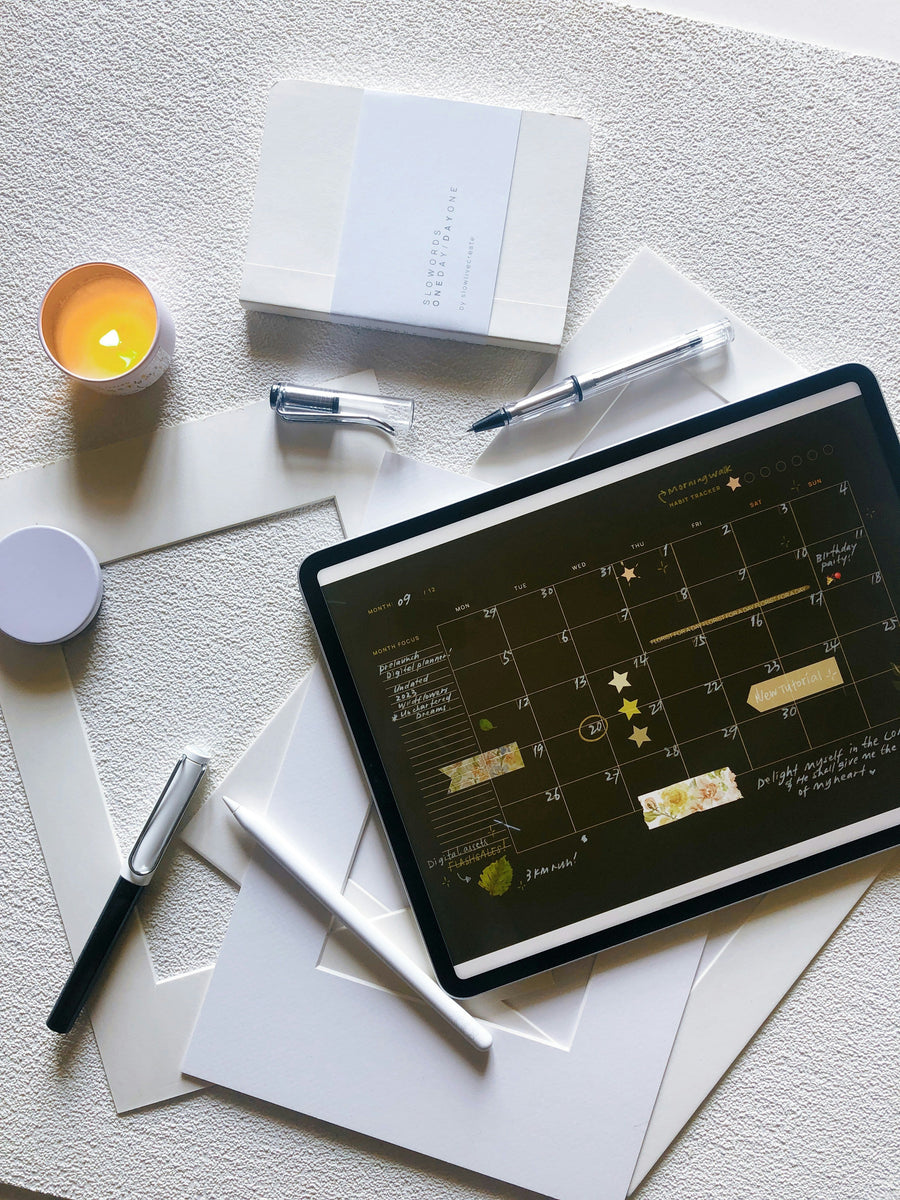
The Planner You Stopped Opening
There's a particular flatness in finding the planner you set up back in January, still neatly laid out, still empty from the third week onwards. You didn't give up because you're disorganised; you gave up because opening it took more effort than the thing you were trying to remember.
So here's the honest answer about a digital planner: the format matters far less than how quickly you can get something into it. Most of what's sold as a digital planner is a hyperlinked PDF you handwrite on with a stylus inside an annotation app, and it suits women who genuinely enjoy sitting down with it. If that isn't you, a calendar app and one running list will hold your life better than any template.
What should a digital planner actually do for you?
Three things, and that's the whole list. It holds dates that have consequences if you miss them, it holds the undated pile of things you keep meaning to do, and it opens in a few seconds while you're standing up holding something in your other hand.
The popular kind struggles with the third one. A PDF planner sits inside an app like GoodNotes or Notability, so reaching it means the tablet, the right app, the right page, and usually a stylus; and because a PDF is a document, it can't send you a notification about anything. A calendar entry on your phone takes a handful of taps, one-handed, and then it tells you later. Both of those are real tools. They're just good at different jobs.
Why does it stop working around week three?
Because setting one up is pleasant and using one is dull. You spend a Saturday choosing a layout and colour-coding the months, and that part feels like progress; the actual work is a fifteen-second entry you make when you're tired and already halfway out the door. The gap between those two experiences is where most planners quietly die.
So judge any system by its worst moment. Can you use it while queueing, half-distracted, with no stylus anywhere nearby? If the answer's no, it'll work beautifully on the calm days and desert you on the ones where you needed it.
How do you set one up without losing a whole Sunday?
Most of this needs nobody's agreement, so start there and move outwards only as far as you want to. Each step below asks a little more of other people than the one above it.
Things that need nobody
Choose one place for dates and one place for the undated list, and then stop choosing. Two places is plenty; five apps is how a system gets abandoned, because every extra place is another decision at the exact moment you've no appetite for one.
Then put every repeating thing in as a repeating event, once: the renewal that catches you out, the birthday you remember two days late, the monthly thing you always rediscover on the day. This is the only genuine automation a calendar hands you for nothing, and ten minutes of it covers you for a year.
And give yourself ten minutes a week with both lists open at the same time. That's the whole review. You're looking for things that have drifted from the undated list into something with a deadline attached.
Things that need one other person
Send a calendar invitation instead of settling a time inside a message thread. The date then lives in both diaries and neither of you is carrying it in your head, which also means you stop being the one who confirms it twice.
When somebody gives you a date out loud, ask them to put it in writing. A small ask, and it moves the remembering off you.
Things that need a group to shift
Anything involving more than two people goes on one shared calendar, with whoever organises it owning the entry. Dates that live only in a group chat get rediscovered by whoever scrolls back, and that's usually you.
Ask for arrangements in the written channel wherever one exists. This is the slowest route here, and it's the one that changes what people expect of you instead of what you absorb.
What if paper has always worked for you?
Keep the paper. A notebook opens instantly, never updates itself, needs no charging, and plenty of women run entire households and jobs from one without losing a single thing. Nothing about digital is an upgrade on that.
The one place paper struggles is reminding you. If you've a notebook you trust and your phone handles the handful of things that must interrupt you on a specific day, you already have a working system and you can skip all of this.
What if you can't rebuild any of it right now?
Some weeks there's no spare Saturday and no appetite for setting anything up. Then take the smallest version: one list, in whatever notes app is already on your phone, named something you'll recognise when you're half-asleep.
Add to it and don't tidy it. A messy list you actually use beats a beautiful one you've stopped opening, and you can always reorganise it in February when you've the patience.
Love Your Beauty built the Becoming chapter around the quieter version of all this: the part where you start deciding things on your own terms instead of absorbing whatever arrives. If the pile you're carrying feels more like other people's requests than your own plans, The Half Second Before Yes goes into that directly.
Common questions
What's the best digital planner app?
There isn't a single best one, and the split is fairly clean. If you want to handwrite, you need an annotation app such as GoodNotes or Notability plus a PDF planner to write on; if you want speed and reminders, the calendar and notes apps already on your phone will do more for you.
Are digital planner templates worth buying?
They're worth it if you know you'll handwrite and you'll sit down with it most weeks. The template itself does none of the work, so if you've bought two already and opened neither, the layout wasn't the problem.
Digital or paper, which should I choose?
Whichever one you'll open on a bad day. Paper is faster to open and silent; digital can remind you and syncs across your devices. Plenty of women use both, with paper for thinking and the phone for anything time-sensitive.
How do I stop forgetting to open it?
Attach it to something you already do rather than to a time of day you've invented. Ten minutes while the first coffee goes cold, same morning each week, gets kept far more often than a reminder at nine on a Sunday.
How long before a new system feels normal?
Around three weeks of capturing things into it, which is roughly the point most people abandon it. The feeling you're waiting for is reaching for it without deciding to, and that only arrives after it has saved you once.
Arrow keys, or swipe



One letter, most Sundays.
Written to one woman rather than a list. No offers dressed as observations, and nothing sent because it is a Tuesday.