

Monday · October 19 “Come back to yourself. She is waiting.”
Buy the Thing You Understand
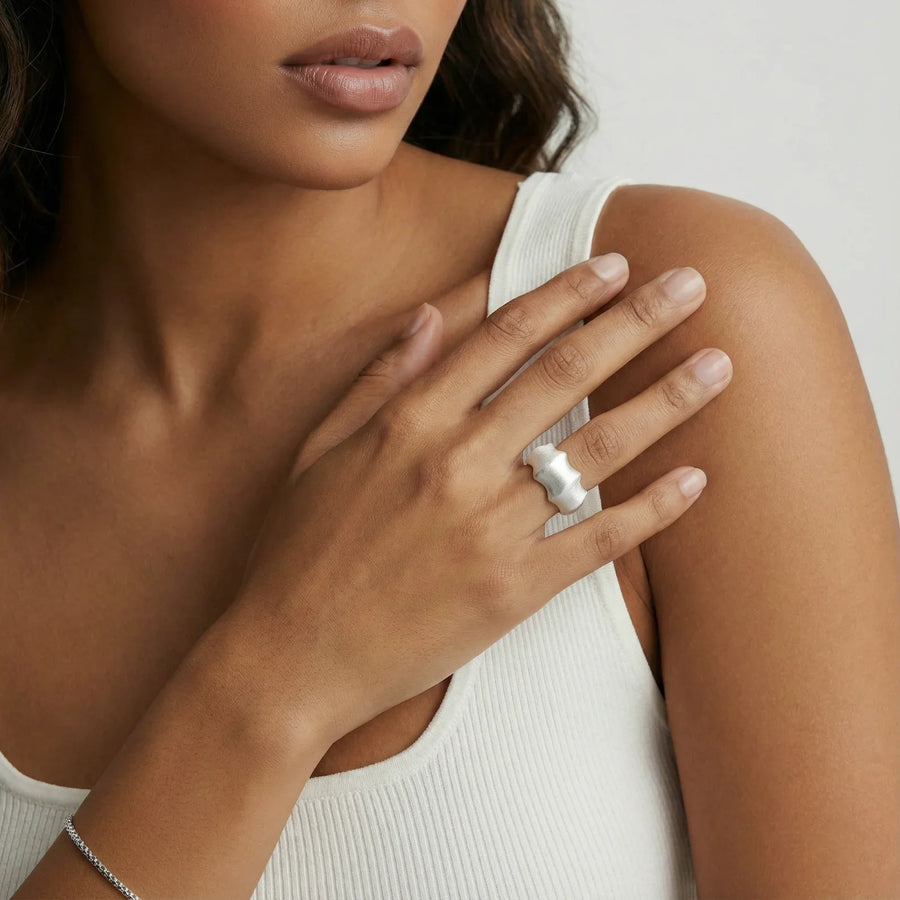
Liquid Silver Statement Ring in 925 sterling silver from Love Your Beauty
Two necklaces, both gold, one four times the price of the other. The listings say 18K gold-plated stainless steel and 925 sterling silver and neither sentence means anything to you at the moment you have to decide.
What is jewellery actually made of, and does it matter?
Four things, mostly: stainless steel, sterling silver, brass and gold plating over one of them. It matters because the material decides how long the piece survives daily wear and how it ages — not how good it looks in the photograph.
Which means the right question is never "is this real gold". It is "what happens to this in a year".
Solid metal versus plated
The first fork in the road. A solid piece is the same metal all the way through, so wear changes its surface but never its colour.
A plated piece is one metal wearing a thin coat of another. It gives you gold colour at a fraction of gold cost, and the coat is finite.
Neither is a con. They are answers to different questions, and the mistake is buying one while expecting the other.
What are the four materials, in plain terms?
Sterling silver — solid, and it will outlive you
925 sterling is 92.5% silver with copper making up the rest, which is what gives it enough hardness to be worn. It tarnishes, which people mistake for damage — it is not, and a polishing cloth reverses it.
 Liquid Silver Statement Ring — £56.13 — Shop →
This is the buy-once end of the range. Costs more, needs occasional polishing, and will not change into a different colour on you.
Gold plate over stainless steel — the daily driver
Stainless steel is hard, does not rust and contains no copper, so when the plating eventually thins it exposes a pale neutral metal rather than something that reacts.
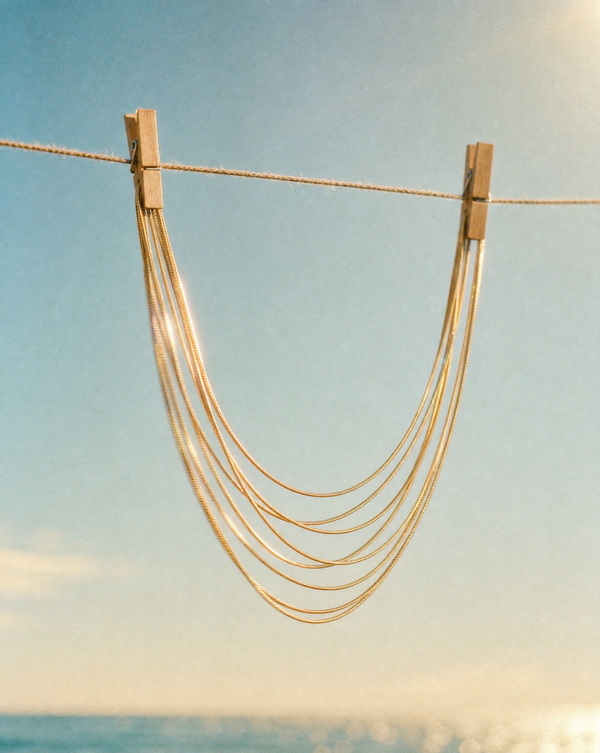
 Twisted Harmony Necklace — £20.00 — Shop →
Twenty pounds for 18K gold plate over stainless steel. For something you intend to put on most mornings, this combination gives you the most wear per pound of anything here.
Gold plate over brass — where the detail lives
Brass is softer and easier to work, which is why anything with hand-painted enamel or fine texture tends to be built on it. The trade is that brass contains copper, so worn-through plating can discolour.
 Twisted Flame Hoops — £47.25 — Shop →
Hand-painted enamel on 18K gold-plated brass. You could not make this piece in steel, which is the honest reason it is brass rather than a corner being cut.
Cubic zirconia and freshwater pearl
Zirconia is a lab-made stone that behaves like a hard-wearing crystal. Freshwater pearl is real, organic, and the softest thing you will own — it dislikes perfume and hairspray more than any metal does.
So what should you actually buy?
Match the material to the job rather than to the budget.
Everyday, worn constantly, not thought about — plate over stainless steel. Statement piece worn occasionally where detail matters — plated brass. Something you want in twenty years — solid silver.
And buy the material for where it sits. Rings and chains take the most friction, so they benefit most from solid metal or a steel base; earrings barely rub against anything, so plating survives on them almost indefinitely.
Why this is worth ten minutes
Because the alternative is what most of us have — a drawer of pieces that turned a colour we did not expect, and a vague sense of having been had.
You were not had. Nobody told you what you were buying, and the answer takes about a paragraph.
Knowing it is the difference between shopping hopefully and shopping deliberately, which is the whole of the Becoming chapter at Love Your Beauty in one small practical form.
If you want the longer version on how plating wears and what makes it last, the metal against your skin is the other half of the same decision.
Buy the thing you understand.
Common questions
What does 925 sterling silver mean?
That the metal is 92.5% pure silver, with copper or another metal making up the rest to give it enough hardness to wear. Pure silver alone is too soft for jewellery that gets handled.
Is stainless steel jewellery good quality?
For durability, it is one of the best bases available — hard, rust-resistant and free of copper, so it does not discolour skin. It is used as a base under gold plating precisely because it ages so predictably.
What is eco-brass?
Brass produced with a reduced or eliminated lead content compared with traditional alloys. It behaves like brass for the maker, which is why detailed and enamelled pieces are often built on it.
Is cubic zirconia the same as diamond?
No — it is a lab-created stone that mimics the look at a fraction of the cost. It is hard-wearing and holds its sparkle well, though it is softer than diamond and can scratch over years of daily wear.
Which jewellery material lasts longest?
Solid metals — sterling silver and stainless steel — because there is no coating to wear through. Among plated pieces, those built over a stainless steel base outlast those built over brass.
Wear it
Liquid Silver Statement Ring — £56.13 — Shop →
Twisted Harmony Necklace — £20.00 — Shop →
Twisted Flame Hoops — £47.25 — Shop →
Arrow keys, or swipe

One letter, most Sundays.
Written to one woman rather than a list. No offers dressed as observations, and nothing sent because it is a Tuesday.